To succeed as a physician entrepreneur, bringing a good clinical idea is not enough. Understanding the problem your venture will help to solve is a must, as is building a sustainable business model and working with people whose skills complement your own.
“There are a lot of brilliant people on similar journeys, but how do you learn from them to solve your own systemic issues?” said Jack Stockert, MD, managing director of Health2047, the AMA’s wholly owned venture studio that develops and invests in healthcare companies.

He took part in a discussion at the inaugural AMA Physician Entrepreneur Forum that was structured around the participants’ own transitions from medicine into entrepreneurship, commonalities in the companies, ideas and individuals that attract investment, and the realities and tradeoffs of venture capital for physician entrepreneurs.
The AMA Physician Entrepreneur Forum is part of the AMA Career Advancement Collective, a powerful new suite of educational programs and training that helps physicians develop and advance at every stage of their career.
From medicine to entrepreneurship
Sharif Vakili, MD, is a co-founder and the CEO of UpDoc, a clinical augmented intelligence (AI) company that builds physician-supervised, autonomous AI agents.
As he transitioned into entrepreneurship, Dr. Vakili learned that while investors work closely with companies and may be deeply involved in their challenges, the CEO ultimately owns the consequences of decisions. That became even clearer as he moved from evaluating and advising companies to actually running one.
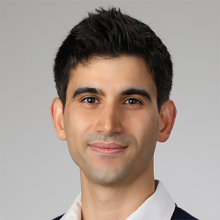
“Being an entrepreneur is way harder than being an investor,” he said. “But if you have the privilege of working in early-stage investing it can help determine if entrepreneurship is right for you because you’ve seen everything from the other side.”
Dr. Stockert’s interest outside clinical medicine was sparked by caring for a young patient with end-stage AIDS. It pushed him toward thinking about larger healthcare problems and how they might be addressed at a systems level.
“There's a lot of people trying to make a difference in this world,” he said. “But how do you learn from other challenges, other problems in other industries, and pour those into some of the issues facing healthcare?”
What makes a business venture-backable?
What makes companies attractive to investors? According to Dan Gebremedhin, MD, it is primarily the promise to expand and create value quickly within a relatively short time.
Dr. Gebremedhin is a partner at Flare Capital Partners, which works with founders to improve outcomes, lower costs and reshape healthcare’s operating systems with software, data and AI,
“Venture investors need to have liquidity and be able to sell their shares,” he said. “Firms essentially have a 10-year window to be out of those investments, so the company has to grow rapidly and show value so investors can exit.”
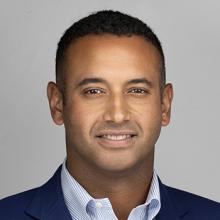
That requires founders to accept outside participation and governance. Disagreements may arise, but founders seeking capital need to be comfortable sharing decision-making and considering different perspectives.
“Founders get very protective,” Dr. Gebremedhin said. “But investors want the same thing they do: for the company to be successful.”
The independent streak that sparks entrepreneurship in the first place can make founders reluctant to seek outside investment, Dr. Vakili said, but sometimes foregoing outside resources is not realistic.
“A good VC [venture capital] fund is not looking to control the founder or the company,” he reminded the audience. “They're just looking to make sure when things go sideways, which invariably happens, they are put to right.”
Investors can also give startups access to networks, experience and connections that would otherwise be inaccessible. Those relationships continue after the deal is made, so founders should evaluate investors in terms of trust and compatibility.
“There are different talents and needs for different situations, and it's rare for one person to be a good founder and CEO,” Dr. Vakili cautioned. “That's why having that humility can be very important in building those relationships.”
The purpose of any business is growth and profitability. An entrepreneur may identify a genuine healthcare need and develop a promising solution, but the next challenge is determining how that solution can become a sustainable business. Only after establishing how the company will make money does it make sense to ask how rapidly it can grow and whether venture capital is needed.
“Healthcare is a mature market with strong incumbents and many complex business models,” Dr. Stockert added. “An entrepreneur is tackling a problem with an idea for a solution and must figure out how to build a sustainable business model and bring that solution to market.”
Think like a physician, act like an entrepreneur
For physician entrepreneurs or doctors aspiring to join the world of entrepreneurship, the panelists offered some revealing insights.
“Diagnosis and problem-solving in patient care is far harder than what you have to do as an entrepreneur,” Dr. Stockert noted. “You're dealing with critical questions, data input, information gathering, clarifying and summarizing information, testing, iterating, narrowing, widening and treating. But those are skill sets that you learn in medical school and those skill sets will serve you well in business.”
Dr. Gebremedhin focused on the difference between clinical and entrepreneurial thinking.
“In medicine, there are right and wrong answers and physicians—as scientists—want to be right,” he said. “However, in business there are assumptions and decisions made on limited and imperfect information, and sometimes physicians can be uncomfortable in that gray space. Smart investors are not necessarily looking for someone who's right, but for the momentum that shows that a business can grow and succeed.”
It is important to approach potential supporters as sources of knowledge and relationships first, rather than capital, said Dr. Vakili.
“Develop relationships, refine storytelling abilities, beat things to death and let go of your strongly held beliefs. Whatever is left standing will be the right way to move forward,” he advised. “Ask for money and you'll get advice, but ask for advice and you'll get money.”